skip to main |
skip to sidebar
We all know Facebook filed its IPO setting the stage for the
internet industry’s biggest coming-out party and one of Wall Street’s
most hotly anticipated events of 2012, with a valuation of over $100
billion. Here is a look at some of the personalities behind the world’s
largest social network.
Mark Zuckerberg, chief executive and co-founder
 We all know Zuckerberg, portrayed as a brilliant, ambitious and
ruthless empire-builder in the 2010 movie “The Social Network,” founded
Facebook with Chris Hughes, Dustin Moskovitz and Eduardo Saverin while
at Harvard University in 2004.
The 27-year-old frontman, who has repeatedly said he was in no rush
to go public because that might distract employees and dilute his
control, decides the direction and product strategy of the company.
Forbes estimates Zuckberg’s net worth at $17.5 billion, making him the
14th richest man in the United States.
Peter Thiel, investor and director
 The billionaire Stanford alumnus and former Wall Street trader was
Facebook’s first outside investor and director. Thiel co-founded online
payments service PayPal and sold it to eBay Inc for $1.5 billion in
2002.
Christopher Cox, vice president of product
 Cox organizes Facebook’s product strategy and oversees product management and design.
He joined the company in 2005 as a software engineer and was involved
in the first versions of Facebook features such as the News Feed and
Inbox.
Dan Rose, vice president of partnerships
 A former Amazon.com Inc manager who helped develop the “Kindle”
digital book reader, Rose oversees Facebook’s partnerships, forging ties
with Hollywood film studios, game makers, mobile phone companies and
even carmakers. Rose also takes the lead on mergers and acquisitions.
David Fischer, VP of advertising and global operations
 Fischer is responsible for much of Facebook’s vast and highly
profitable advertising network. He runs sales, advertiser marketing and
customer operations.
During seven years at Google Inc, Fischer helped build that company’s
online ad network into the largest in the world. Before that, he was
deputy chief of staff at the Treasury Department during the Clinton
Administration.
Sheryl Sandberg, chief operating officer
 Sandberg, one of the most powerful women in Silicon Valley, oversees
business operations including sales, marketing, business development,
human resources, public policy and communications.
Another former Google employee, Sandberg built and managed Google’s
online sales channels for advertising and publishing and operations for
consumer products.
Before working for Google, she was chief of staff at the Treasury Department under President Clinton.
The head US National Security Agency recently warned that the
notorious internet hacking group, Anonymous, may soon have the ability
to attack the entire US power grid. However, this does not mean hackers
are all bad people. There are White Hat or ethical hacker too.
They identify security weaknesses in computer systems and networks
but instead of taking advantage of these loopholes, expose the weakness
to the system’s administrators allowing them to fix the breach. So, like
everywhere there are good and bad hackers. Here are some international
hacking heroes and villians.
Hero: Steve Wozniak
 Co-founder of Apple and the company’s original engineering brain, Woz
got his first kicks out of the Blue Box, a phone phreaking device that
allowed him and Steve Jobs to make long-distance calls for free by
imitating the tones that routed signals on the AT&T network. The duo
sold more than 100 Boxes for $150 each.
Hero: Tim Berners-Lee
 The World-Wide Web was not on his mind when Lee and a friend were caught hacking at the Oxford University.
Both were banned from using the university’s computers during their
study tenure. Maybe that’s why Lee soldered one for himself using iron,
TTL gates, an M6800 processor and an old television.
Hero: Linus Torvalds
 The star of the ultimate hacking fairytale. Torvalds cobbled together
a makeshift operating system titled ‘Linux’ and shared the program at
an online forum.
Feeds poured in with fixes, improvements and new features. Code
contribution became the USP of Linux, an operating system built on
central hacker ethic: free for all.
Hero: Tsutomu Shimomura
 Not an intuitive hacker, he was prodded to showcase his skills when Kevin Mitnick hacked Shimomura’s home computer.
The result: a good cop bad cop chase that ended with Mitnick in jail.
Shimomura didn’t escape scrutiny: he hacked Mitnick’s cell phone to
track him to an apartment near Raleigh-Durham International Airport.
Hero: Richard Stallman
 Dubbed the father of free software. He earned the badge as a ‘staff
hacker’ at the Massachusetts Institute of Technology where he cracked a
password system.
He moved on to tinkering with the code of a printer and finally ended
up with the big one: The GNU Project that writes free software and mass
produces its operating system.
Villian: Kim Dotcom
 Known as Kim Schmitz, Kim Tim Jim Vestor and ‘Kimble’, Dotcom’s
hacking credentials are dubious. Be it cracking Citibank to transfer $20
million to Greenpeace, or hacking Osama Bin Laden’s Sudanese account,
no claim has been verified.
But he is known for phone phreaking and has been arrested for online piracy.
Villian: Kevin Mitnick
 The US Department of Justice says he was “the most wanted computer
criminal in United States history.” Mitnick started by bypassing punch
cards to hitch free rides on LA buses. Later, he hacked databases of
corporate giants like Nokia and Motorala.
Finally a peeved Shimomura out-hacked him and Mitnick was jailed for 5 years.
Villian: Jonathan James
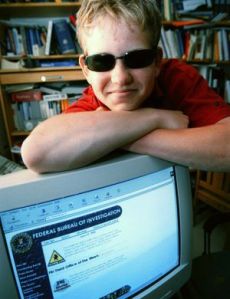 At the age of 16, James installed a backdoor into the US Defense
Threat Reduction Agency server and messed with user names, passwords and
strategic emails. Next up was the NASA database from which he stole
software worth $1.7 million. The result: in 2000, James became the first
juvenile to be imprisoned for hacking.
Villian: Kevin Poulsen
 Law officers think he was “the Hannibal Lecter of computer crime” but hacker buddies knew him as Dark Dante.
Poulsen’s biggest hit: cracking Los Angeles radio’s phone lines to
ensure he was caller number 102, slated to win a Porsche. The FBI got
interested when he hacked their database and soon it was prison time for
Poulsen.
Villian: Robert Tappan Morris
 The brain behind the first computer worm to attack the Internet – the
Morris Worm. Released in 1988, it infected over 6,000 machines. Morris
claimed he wanted to test the reach of the Net. Law officers didn’t buy
the theory: he served three years’ probation, 400 hours of community
service and paid a fine of $10,500.
DTH services are available in every nook and corner to avail the service
just buy DTH setup box and the service is bundled with 6 months free
with 120 channels according to your selection of the package.. These are
all sim based , we have to charge it and enjoy the required channels
providing by the service provider..
Doordarshan will launch its Direct-To-Home telecast from April 1.
Broadcasters like Star and Zee are pushing hard for DTH services in
India [ Images ] too.
So what is this DTH all about? How, if at all, does it help the customer? Is it good? Let's find out.
What is DTH?
DTH stands for Direct-To-Home television. DTH is defined as the
reception of satellite programmes with a personal dish in an individual
home.
DTH does away with the need for the local cable
operator and puts the broadcaster directly in touch with the consumer.
Only cable operators can receive satellite programmes and they then
distribute them to individual homes.
How does DTH work?
A DTH network consists of a broadcasting centre, satellites, encoders, multiplexers, modulators and DTH receivers.
A DTH service provider has to lease Ku-band transponders from the
satellite. The encoder converts the audio, video and data signals into
the digital format and the multiplexer mixes these signals. At the user end, there will be a small dish antenna
and set-top boxes to decode and view numerous channels. On the user's
end, receiving dishes can be as small as 45 cm in diametre.
DTH
is an encrypted transmission that travels to the consumer directly
through a satellite. DTH transmission is received directly by the
consumer at his end through the small dish antenna. A set-top box,
unlike the regular cable connection, decodes the encrypted transmission.
How does DTH really differ from cable TV?
The way DTH reaches a consumer's home is different from the way cable TV
does. In DTH, TV channels would be transmitted from the satellite to a
small dish antenna mounted on the window or rooftop of the subscriber's
home. So the broadcaster directly connects to the user. The middlemen
like local cable operators are not there in the picture.
DTH can also reach the remotest of areas since it does away with the intermediate
step of a cable operator and the wires (cables) that come from the
cable operator to your house. As we explained above, in DTH signals
directly come from the satellite to your DTH dish.
Also, with DTH, a user can scan nearly 700 channels!
Does one need to put two dish antennae and pay double subscription per month if one has two TVs [ Get Quote ]?
For multiple connections in the same premises, one can use the same
connection. However, every television set will need to have an
individual STB.
Also, DTH is a national service and the STBs enable a viewer to change service providers without changing the STB, even if one moves from one city to another.
Can a CAS set-top box be used for DTH?
No, these are different set-top boxes.
Why is DTH is being discussed now?
Doordarshan plans to launch its DTH telecast from April 1. The
government has said it will provide 10,000 dishes free across eight
states for increased community viewing of the DTH service. The
government is estimated to be investing over Rs 300 crore (Rs 3 billion)
in this DTH venture.
There are four serious contenders for DTH services in India: Doordarshan, Star, Zee, and Data Access.
Is DTH superior to cable TV?
Yes. DTH offers better quality picture than cable TV. This is because
cable TV in India is analog. Despite digital transmission and reception,
the cable transmission is still analog. DTH offers stereophonic sound
effects. It can also reach remote areas where terrestrial transmission and cable TV have failed to penetrate. Apart from enhanced picture quality, DTH has also allows for interactive
TV services such as movie-on-demand, Internet access, video
conferencing and e-mail. But the thing that DTH has going for it is that
the powerful broadcasting companies like Star, Zee, etc are pushing for
it.
So why are broadcasters pushing for DTH?
In DTH, the payments will be made directly by the subscriber to the satellite company offering the service.
A big problem that broadcasters face in India is the issue of under-reporting of subscribers by cable operators.
Consider the cable operators pyramid. Right at the top is the
broadcaster. Next comes the Multi Service Cable Operator (MSOs) like
Siticable, InCable, etc. Below them are the Access Cable Operators
(ACOs) or your local cable guy who actually lays the wires to your house.
The local cable operators or the ACOs then allegedly under-report the
number of subscribers they have bagged because they have to pay the MSOs
something like Rs 30-45 per household. Showing a lesser number of
households benefits ACOs.
With no way to actually cross check, the MSOs and the broadcasters lose a
lot. Broadcasters do not earn much in subscription fees and are mostly
dependent on advertisement revenue to cover their costs, which is not
sustainable and does not offer high growth in revenues for broadcasters.
The way out of this is to use a set-top box so that it will be clear how
many households are actually using cable or going for DTH where
broadcasters directly connect to consumers and can actually grow
revenues with a growth in the subscriber base.
Why do Doordarshan, Zee, Star think DTH will work in India?
Today, broadcasters believe that the market is ripe for DTH. The prices
of the dish and the set-top box have come down significantly. Overall
investments required in putting up a DTH infrastructure has dropped and
customers are also reaping the benefits of more attractive tariffs.
The major thing that DTH operators are betting on is that the service is coming at a time when the government is pushing for CAS (conditional access system), which will make cable television more expensive, narrowing the tariff gap between DTH and cable.
Will DTH be cheaper than cable or more expensive?
DTH will be definitely more expensive than cable as it exists today.
A set-top box is a must for DTH. Earlier, when CAS made set-top box
mandatory for households, the costs between DTH and cable would not have
been too wide.
But CAS on the backburner now -- which means no set-top box (a must for DTH), the price gap between DTH and cable will be wide.
In Oct 2002, Siticable, which is owned by Zee, said that the cost of the
installation equipment, which includes the receiver dish and the
set-top box, would be priced at around Rs 3,900. Siticable is looking to
rope in 1 million subscribers in 15 months.
Other estimates say that digital cable set-top box may cost Rs 4,000, a DTH decoder dish is unlikely to cost less than Rs 7,000.
DTH's minimum subscription could be priced around Rs 500 per month.
Some reports say that an entry level DTH STB will cost about Rs 7,000
(including taxes and installation cost at consumers end). A more
advanced STB with value added features like PVR (Personal Video
Recorder), PSTN connectivity, Gamming console, channel management
system, etc. may cost as much as Rs 15,000.
What is the history of DTH in India?
DTH services were first proposed in India in 1996. But they did not pass
approval because there were concerns over national security and a
cultural invasion. In 1997, the government even imposed a ban when the
Rupert Murdoch-owned Indian Sky Broadcasting (ISkyB) was about to launch
its DTH services in India.
Finally in 2000, DTH was allowed. The new policy requires all operators
to set up earth stations in India within 12 months of getting a license.
DTH licenses in India will cost $2.14 million and will be valid for 10
years. The companies offering DTH service will have to have an Indian
chief and foreign equity has been capped at 49 per cent. There is no
limit on the number of companies that can apply for the DTH license.
So, what's the buzz? Will DTH finally be the one that rules?
The cable system is well entrenched in India and is showing quite rapid
growth. If DTH had come to India in 1996-97 (like Star had originally
attempted), then it could have made a significant breakthrough.
Europe is an example of this. DTH developed there before cable and now
controls nearly 80 per cent of the total satellite television subscriber
base. But in US, cable rules because it came before DTH.
DTH will definitely cut into the existing cable user base. It will make
the local cable operator less important and take business away from him.
It will give consumers greater choice.
But it is likely to be an up market premium product and most middle class households will stick to cable.
A digital signature helps to keep a document that is transmitted electronically authentic - meaning  the
recipient of the document knows who has created it, and is also assured
that there have been no alterations to the document after it left the
sender.
The digital signature used by the sender of the document
`encrypts' or locks the document. He uses keys to encrypt it. Only the
authorised recipient, who has the appropriate key to the document, can
open it once he receives it. Software takes care of the digital signature processes.
For more information on how a digital signature keeps a document tamper-proof, please look up this URL: http://computer.howstuffworks.com/

Contact with Aliens likely within 12 years
Humans could make contact with alien life within 12 years, with the
aid of the world’s largest radio telescope, a leading UFO expert has
claimed.
One of the key questions whether extra-terrestrial life exists, could
be answered by 2024 with the development of a supersized £1.3 billion
radio telescope, the Daily Express reported.
The development of the Square Kilometre Array (SKA) telescope will
unleash “new and exciting possibilities”, according to former UK
ministry of defence UFO project leader Nick Pope.
“I will be controversial and give you an exact year of when I believe
first confirmation of contact will be made and that is 2024, the year
in which if everything goes according to plan the Square Kilometre Array
will be fully operational,” said Pope, who studied UFO sightings for 21
years.
The SKA, to be started in 2016, is set to be the world’s largest
radio telescope and will answer some of the fundamental unanswered
questions of our universe.
Made up of thousands of radio wave receptors covering 4,921 square km
of the Earth’s surface in the Australian outback, scientists have
claimed it will provide alternative views of the universe than those
seen with optical telescopes.
Scientists leading its development have suggested the SKA will be 50
times more sensitive, and will survey the sky 10,000 times faster, than
any other telescope.
Asteroid space station to orbit the Moon
London: NASA scientists are planning to capture a 500,000 kg
asteroid, relocate it and transform it into a space station for
astronauts to refuel at on their way to Mars.
It would be the first time a celestial object has ever been moved by humans, the ‘Daily Mail’ reported.
The White House’s Office of Science and technology will consider the
USD 2.6 billion plan in the coming weeks as it prepares to set its space
exploration agenda for the next decade.
A feasibility report prepared by NASA and California Institute of
Technology (Caltech) scientists outlined how they would go about
capturing the asteroid.
An ‘asteroid capture capsule’ would be attached to an old Atlas V
rocket and directed the asteroid between the Earth and the Moon. Once
close, the asteroid capsule would release a 50 ft diameter bag that wrap
around the spinning rock using drawstrings, the paper said.
The craft would then turn on its thrusters, using an estimated 300 kg
of propellant, to stop the asteroid in its tracks and tow it into a
gravitationally neutral spot.
From here space explorers would have a stationary base from which to launch trips deeper into space.
“The idea of exploiting the natural resources of asteroids dates back
over a hundred years, but only now has the technology become available
to make this idea a reality,” the report said.
“The feasibility is enabled by three key developments: the ability to
discover and characterise an adequate number of sufficiently small
near-Earth asteroids for capture and return; the ability to implement
sufficiently powerful solar electric propulsion systems to enable
transportation of the captured asteroid; and the proposed human presence
in cislunar space in the 2020s enabling exploration and exploitation of
the returned asteroid,” it said.
NASA declined to comment on the project because it said it was in
negotiations with the White House, but it is believed that technology
would make it possible within 10-12 years.

Ferrari 250 GT SWB Auctioned for 4 Million Pounds
A 1960 classic Ferrari could fetcha whopping four million pounds and
become one of the world’s most expensive cars when it is auctioned next
month.
The stunning 250 GT SWB Berlinetta Competizione is one of just 74 models built by the Italian car maker.
It’s three-litre V12 engine gives a 0-60mph time of less than six seconds.
A similar model sold in 2011 for over 3.1 million pounds. The classic
Ferrari market has skyrocketed over the past 18 months, The Sun
reported.
The 250 GT was the 17th model in the series to roll off the
production line in 1960 and has had just four owners over the past 52
years.
US auctioneer Shelby Myers said: “There is nothing that trumps the
magnificent style, drivability, and sound of the 250 SWB Berlinetta.
“Ultra-exclusive, it is certainly one of the most desirable Ferraris
ever produced. Rarely do such important cars come to public market,”
Myers said.


